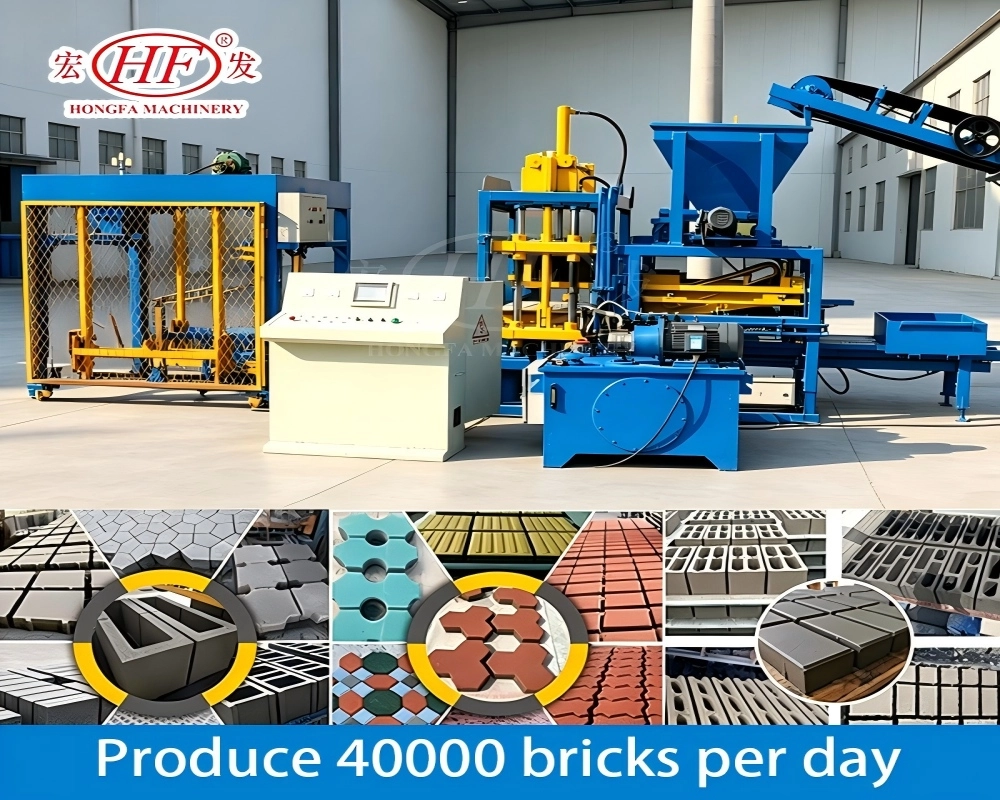
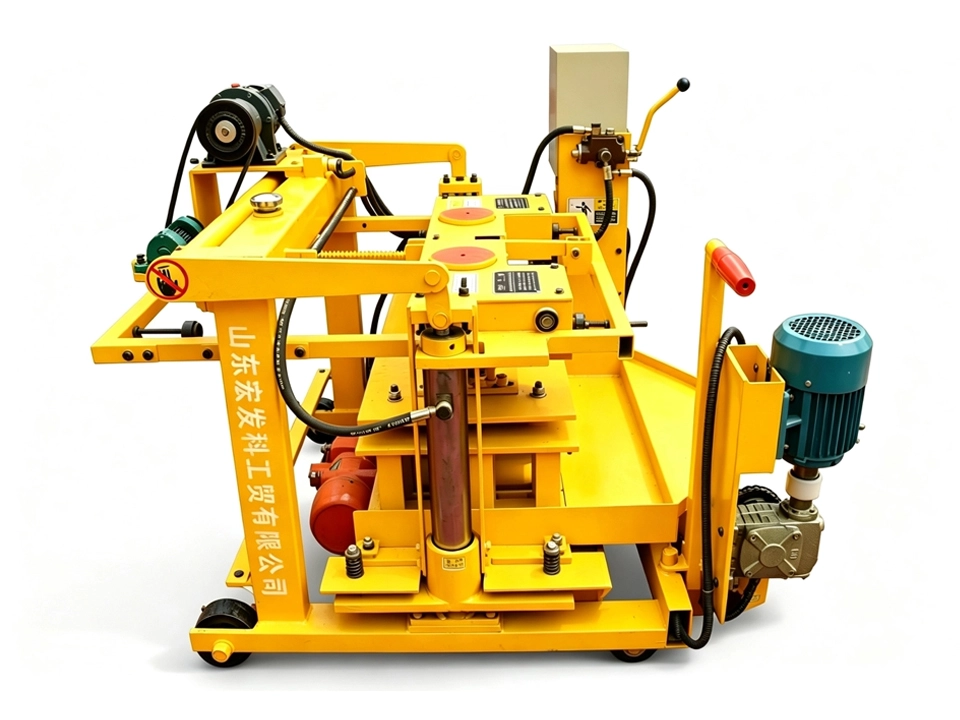
1. Pallet‑free Ground Demoulding, Saving Huge Pallet‑related Consumable Investment
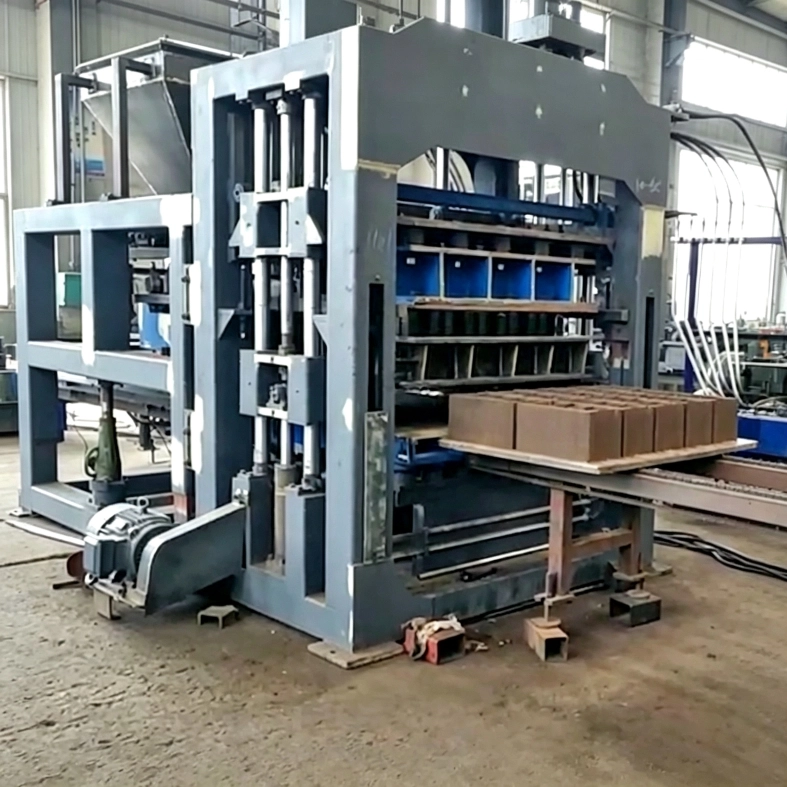
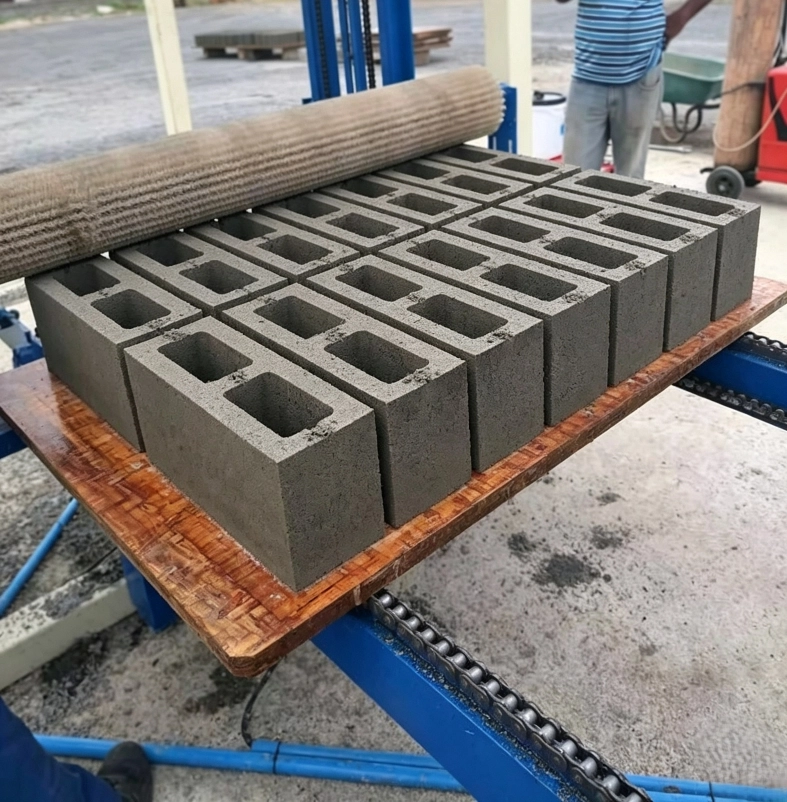
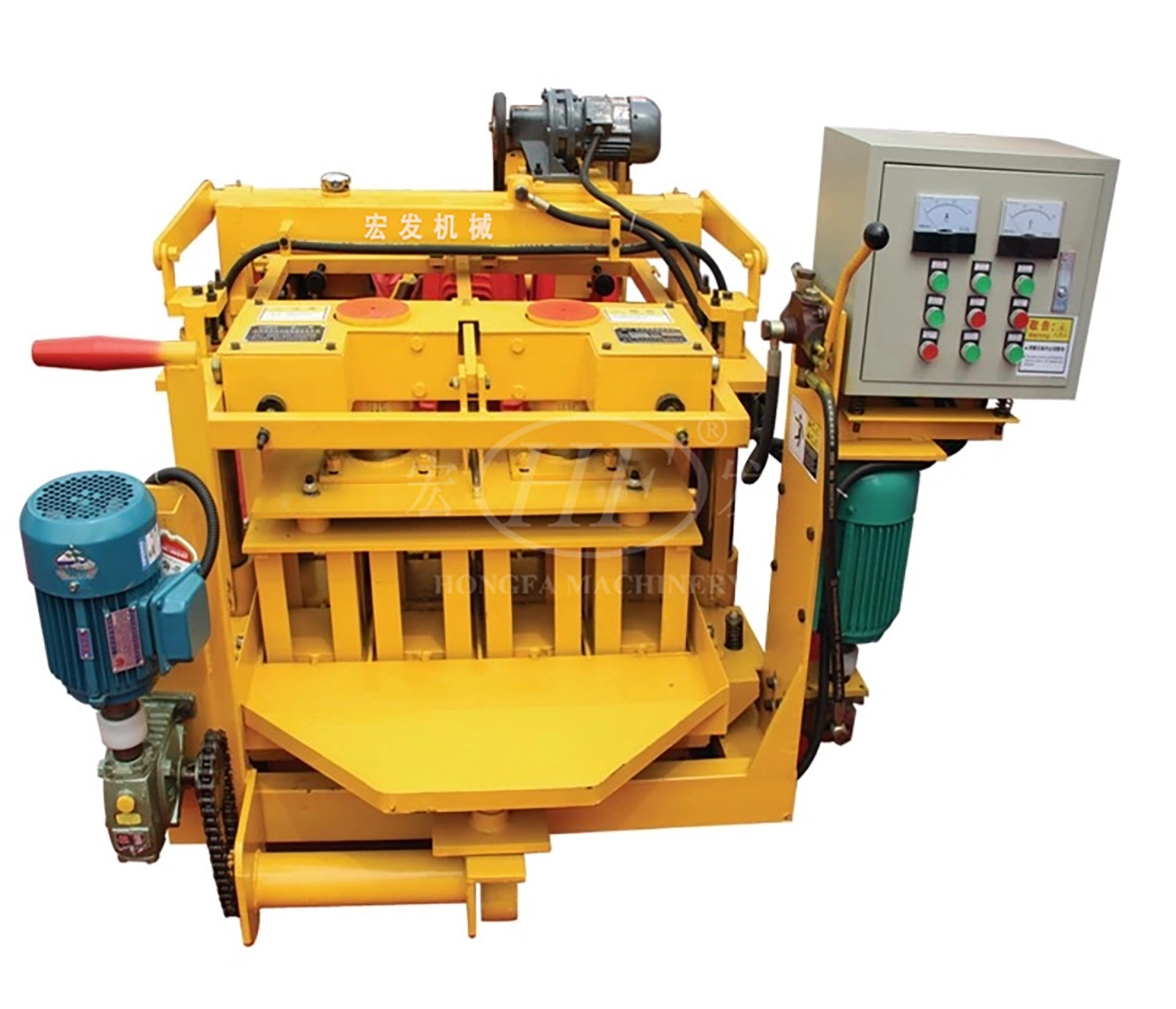
Traditional block machines require continuous purchase and replacement of wooden or plastic pallets, which brings recurring costs. QMJ‑4A is an egg‑layer mobile machine. After forming, the whole machine moves forward and leaves green blocks directly on ground for curing. No pallets are required at all. You save the one‑time large‑sum pallet investment as well as later replacement cost for worn pallets. It is highly suitable for budget‑limited start‑up operators and on‑site construction‑site brick‑making projects.
2. Built‑in Travel, Steering & Reverse Function, High Site Flexibility & Lower Block Transportation Cost
Equipped with travelling motor and steering mechanism for forward movement, spot turning and reversing. No large‑scale fixed workshop building is required; only level hardened ground is needed for production. It can work in small workshops or directly drive to construction sites for on‑site block manufacturing. Finished blocks stay on‑site directly, cutting freight cost and breakage loss during handling. You can take scattered rural and remote construction orders which cannot be easily fulfilled by fixed block plants.
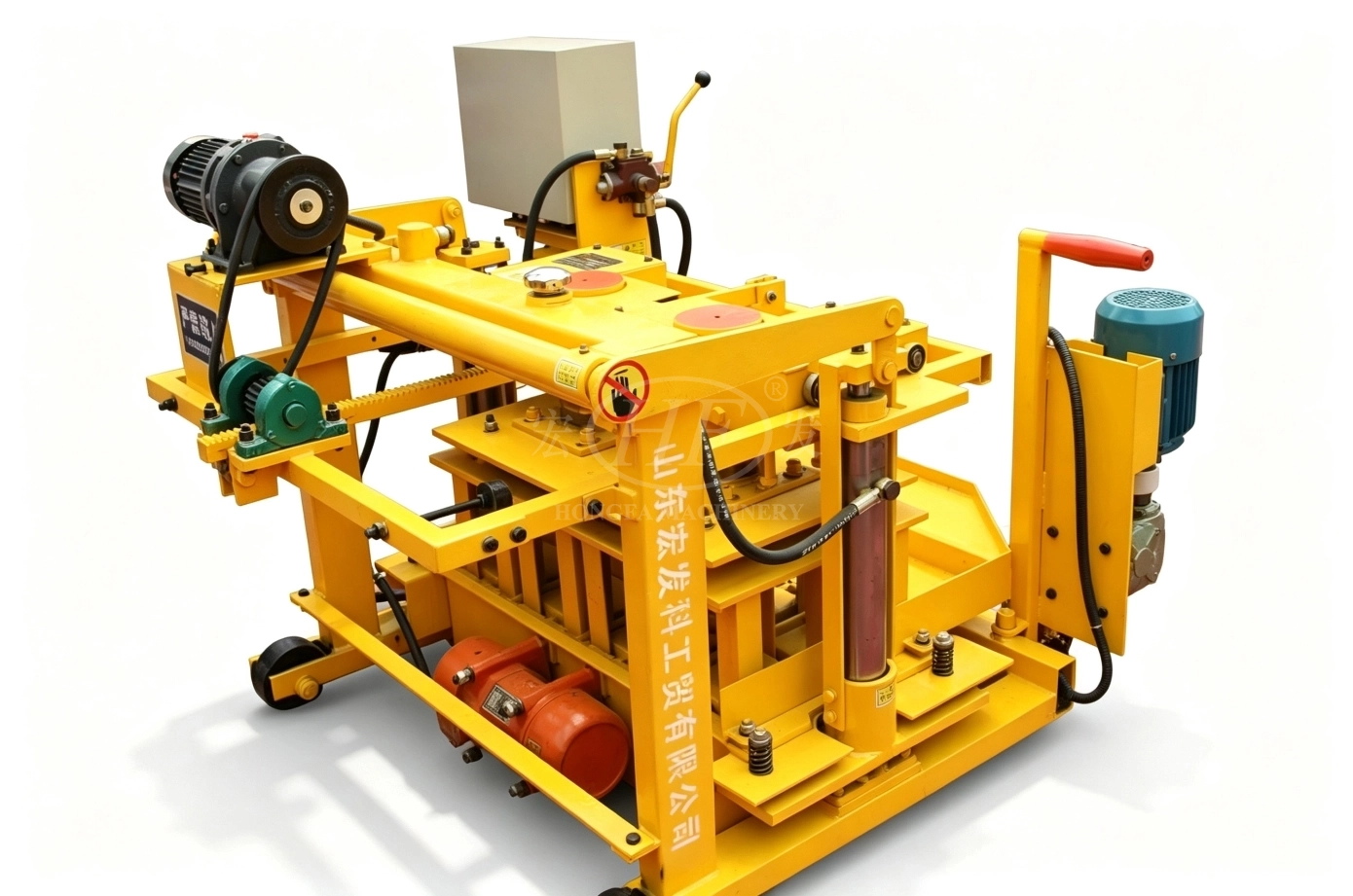
3. Mold‑box Vibration & Hydraulic Compression, Dense Qualified Blocks & Less Waste Products
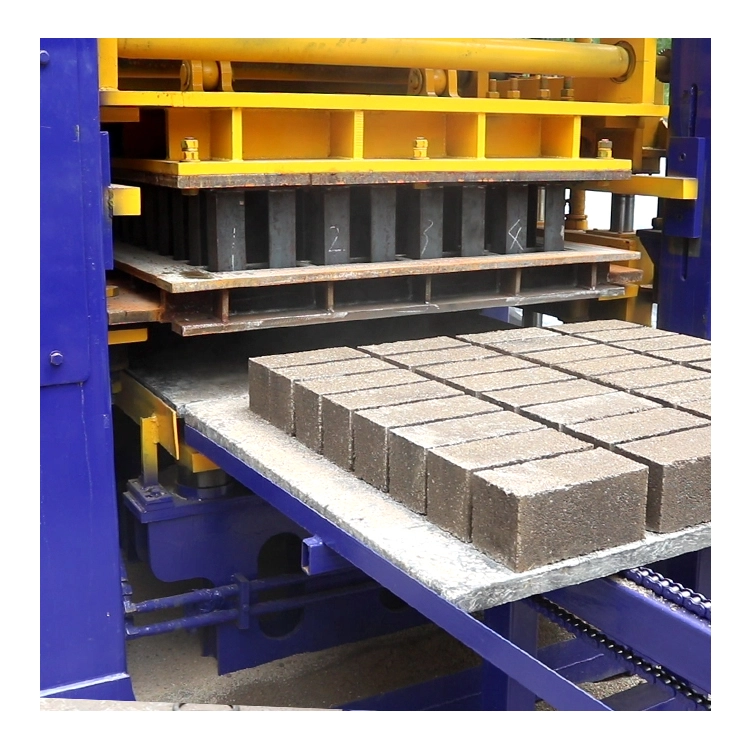
Integrated mold‑box vibration cooperates with hydraulic pressing. Vibration energy transfers fully to mold cavities to fill raw materials and expel trapped air bubbles. Produced hollow blocks and solid standard bricks feature high density, qualified strength, flat appearance and consistent dimension. It reduces rejects caused by looseness or insufficient filling, cuts raw‑material waste and guarantees quality for small‑and‑medium‑volume orders.
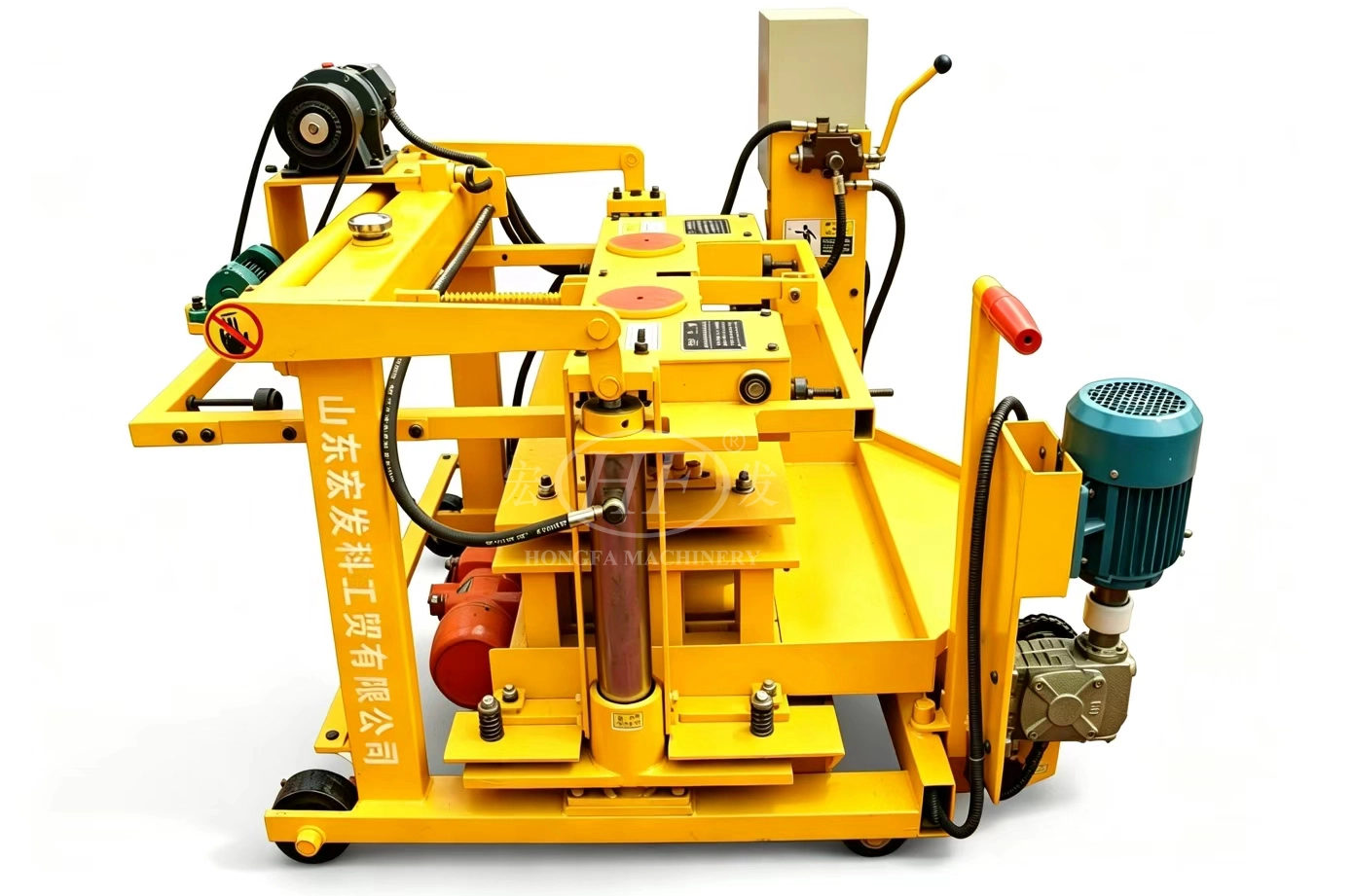
4. Low Power Consumption, Saving Electricity Expense For Continuous Production
The machine consumes only 1/6 power compared with other machines of similar output capacity. For individual owners and small workshops, electricity is a long‑term recurring expense. Lower power draw reduces power‑cost per block and improves your profit margin over long‑time continuous runs.
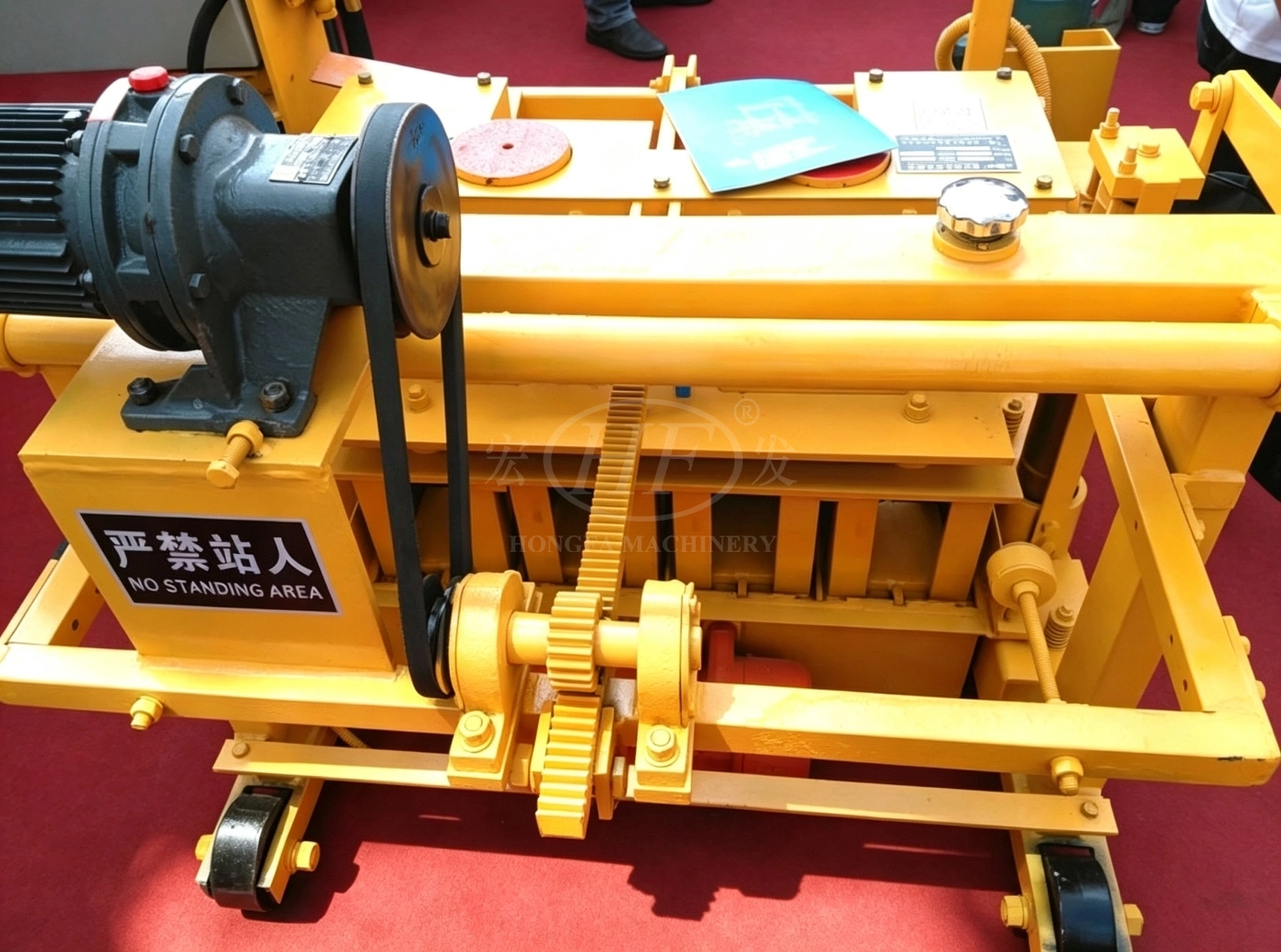
5. Simplified Robust Structure, Taiwan‑origin Hydraulic Components, Low Failure Rate & Easy Maintenance
The machine is welded from high‑quality steel with streamlined structure and fewer wearing parts. Hydraulic system adopts Taiwan hydraulic components with good anti‑fatigue performance. Without complex full‑automatic pipeline‑line structure, failure points are limited. Ordinary workers can operate after short training without highly‑paid senior technicians. It minimizes unexpected downtime and avoids delivery delays for small‑batch orders.
6. Quick‑change Molds, Multi‑block Production Capacity For Flexible Small‑batch Orders
You can produce hollow blocks, perforated bricks, solid standard bricks and other concrete blocks simply by swapping molds. When market orders change, you do not need to buy extra main machines. One single unit handles various wall‑block specifications for small‑batch mixed orders and improves overall equipment utilization rate.
7. Wide Raw‑material Compatibility, Utilize Local Solid Waste To Cut Raw‑material Expense
Besides sand, stone and cement, this machine accepts stone dust, furnace slag, fly ash, coal gangue, construction waste, mine tailings and other locally‑available residues. You can source local waste materials, reduce cement and aggregate purchasing cost while keeping block quality. Your finished blocks gain better price competitiveness for local markets. It fits mountainous areas, mining zones, suburbs and construction‑site environments.
1. Pallet‑free Ground Demoulding, Saving Huge Pallet‑related Consumable Investment
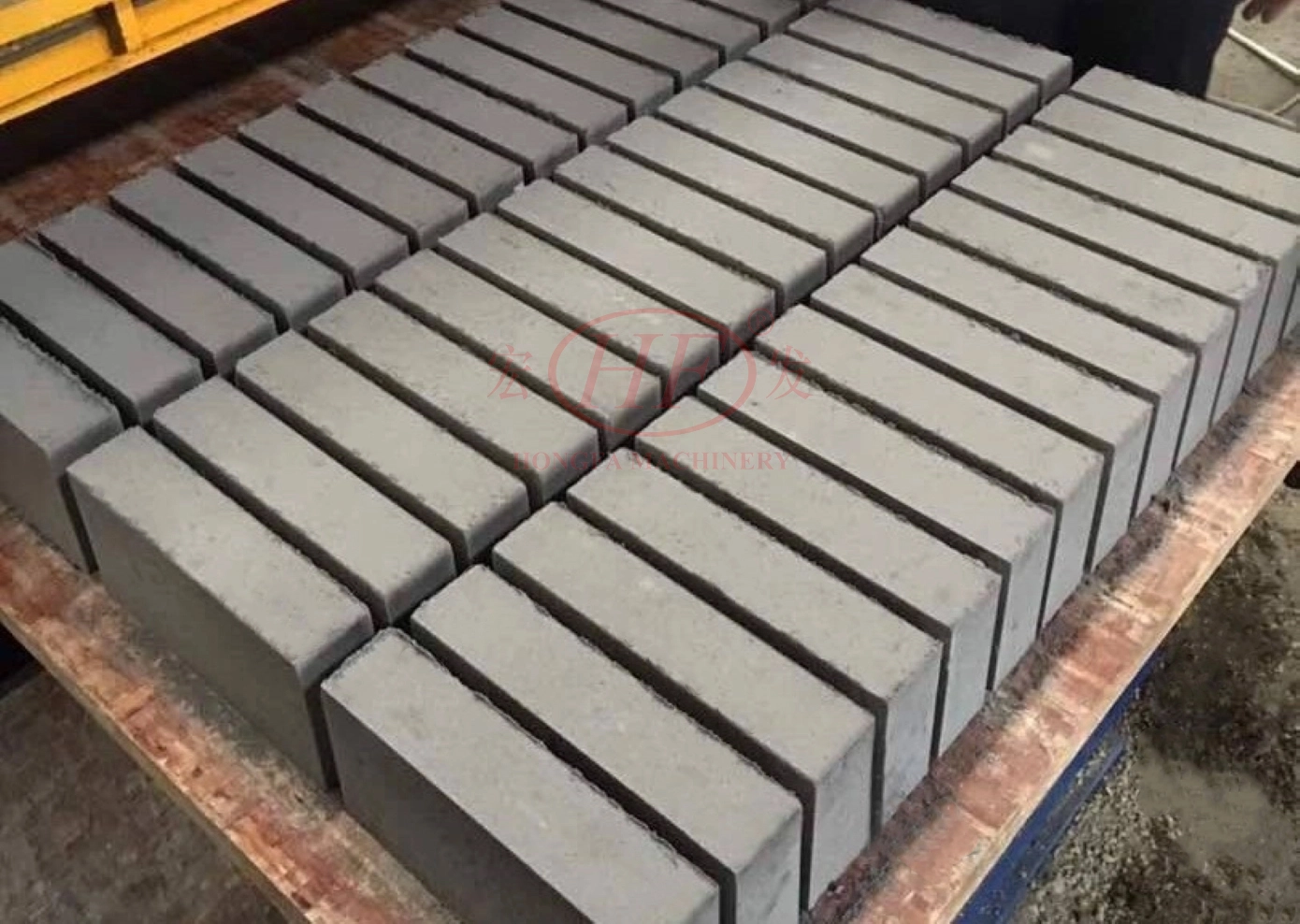
Traditional block machines require continuous purchase and replacement of wooden or plastic pallets, which brings recurring costs. QMJ‑4A is an egg‑layer mobile machine. After forming, the whole machine moves forward and leaves green blocks directly on ground for curing. No pallets are required at all. You save the one‑time large‑sum pallet investment as well as later replacement cost for worn pallets. It is highly suitable for budget‑limited start‑up operators and on‑site construction‑site brick‑making projects.
2. Built‑in Travel, Steering & Reverse Function, High Site Flexibility & Lower Block Transportation Cost
Equipped with travelling motor and steering mechanism for forward movement, spot turning and reversing. No large‑scale fixed workshop building is required; only level hardened ground is needed for production. It can work in small workshops or directly drive to construction sites for on‑site block manufacturing. Finished blocks stay on‑site directly, cutting freight cost and breakage loss during handling. You can take scattered rural and remote construction orders which cannot be easily fulfilled by fixed block plants.
3. Mold‑box Vibration & Hydraulic Compression, Dense Qualified Blocks & Less Waste Products
Integrated mold‑box vibration cooperates with hydraulic pressing. Vibration energy transfers fully to mold cavities to fill raw materials and expel trapped air bubbles. Produced hollow blocks and solid standard bricks feature high density, qualified strength, flat appearance and consistent dimension. It reduces rejects caused by looseness or insufficient filling, cuts raw‑material waste and guarantees quality for small‑and‑medium‑volume orders.
4. Low Power Consumption, Saving Electricity Expense For Continuous Production
The machine consumes only 1/6 power compared with other machines of similar output capacity. For individual owners and small workshops, electricity is a long‑term recurring expense. Lower power draw reduces power‑cost per block and improves your profit margin over long‑time continuous runs.
5. Simplified Robust Structure, Taiwan‑origin Hydraulic Components, Low Failure Rate & Easy Maintenance
The machine is welded from high‑quality steel with streamlined structure and fewer wearing parts. Hydraulic system adopts Taiwan hydraulic components with good anti‑fatigue performance. Without complex full‑automatic pipeline‑line structure, failure points are limited. Ordinary workers can operate after short training without highly‑paid senior technicians. It minimizes unexpected downtime and avoids delivery delays for small‑batch orders.
6. Quick‑change Molds, Multi‑block Production Capacity For Flexible Small‑batch Orders
You can produce hollow blocks, perforated bricks, solid standard bricks and other concrete blocks simply by swapping molds. When market orders change, you do not need to buy extra main machines. One single unit handles various wall‑block specifications for small‑batch mixed orders and improves overall equipment utilization rate.
7. Wide Raw‑material Compatibility, Utilize Local Solid Waste To Cut Raw‑material Expense
Besides sand, stone and cement, this machine accepts stone dust, furnace slag, fly ash, coal gangue, construction waste, mine tailings and other locally‑available residues. You can source local waste materials, reduce cement and aggregate purchasing cost while keeping block quality. Your finished blocks gain better price competitiveness for local markets. It fits mountainous areas, mining zones, suburbs and construction‑site environments.
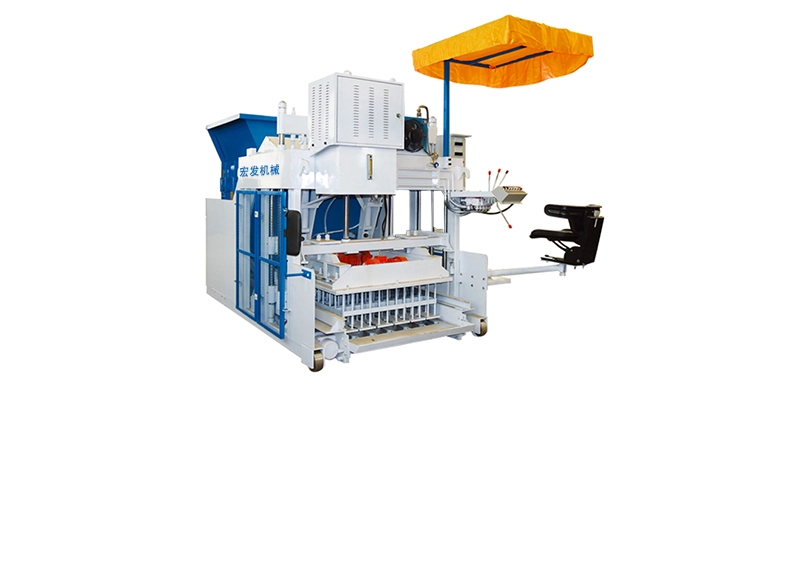 QMJ-10A Interlocking Block Making Machine | Mobile Pallet-Free Interlock Brick Production Equipment
Hongfa QMJ-10A mobile interlocking block machine works without pallets for high-strength interlock bricks. It adopts dua...
 QMJ-10A Mobile Hollow Block Machine | High Output Concrete Hollow Block Production Equipment
QMJ-10A mobile hollow block machine, Hongfa electromechanical hydraulic integrated no-pallet block machine, specially de...
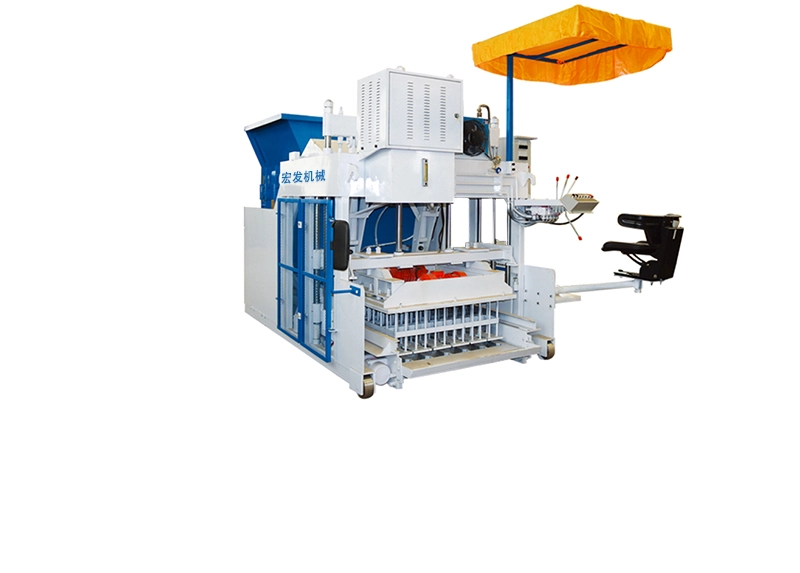 QMJ‑10A Compressed Earth Egg Laying Block Making Machine
QMJ‑10A is a pallet‑free mobile hydraulic block making machine with secondary mould‑vibration design. Overall dimension ...
Shandong Hongfa Scientific Industrial&Trading Co.,Ltd ©️2026Copyright © LU ICP B 16041216-4